
Energy efficiency in housing
Facility managers and homeowners benefit from periodic thermal inspections to confirm that they are not spending money on wasted energy. Over time, the insulation capacity of any type of building will gradually degrade or suffer moisture intrusion and damage, but knowing what's going on behind the wall is the hardest part. Thermography is a powerful tool for finding those underperforming or degraded areas, and for tracking energy consumption for both heating and cooling. Simple gap sealing in common problem areas can save up to 20% per year on energy bills.
Even without any training, infrared cameras provide images that make it clear where a home or commercial building needs attention. The FLIR Support Center is also available to provide more detailed information to professionals or anyone who wants to get the most out of their camera.
Isolation
The first step in inspecting insulation is to examine window and door weatherstripping. Windows and doors are often problem areas for energy loss, either from old, disintegrating seals or poor original installation. Weatherstripping materials tend to shrink as the weather cools, leaving gaps large enough for air to flow through, running the heating or air conditioning system more than necessary. Detecting bad weather stripping allows you to prepare your home more efficiently for the winter season and focus on maintaining windows and doors that can cause the most heat loss.
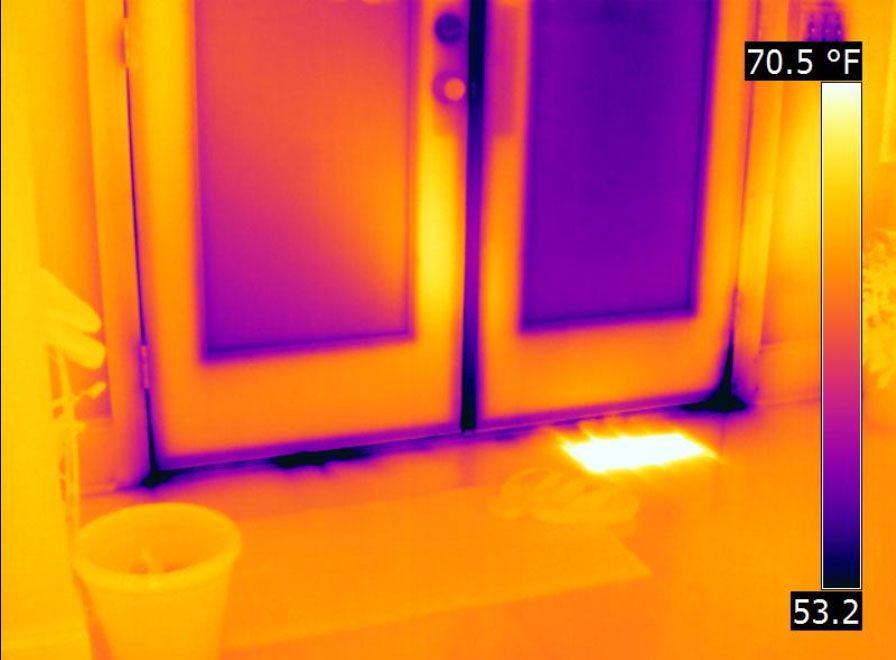
Cold air enters where weatherstripping should keep it out.
Any questions?
Request information
Thermography is especially useful for detecting missing insulation or points where insulation has been displaced. Degradation of wall insulation can be due to many reasons: pests can get in and displace the material, or moisture can deteriorate it over time. Whatever the cause of poor insulation, you will need to find it before starting repairs. With a temperature difference of 6°C between the inside of the building and the outside, points of poor insulation can be detected immediately.
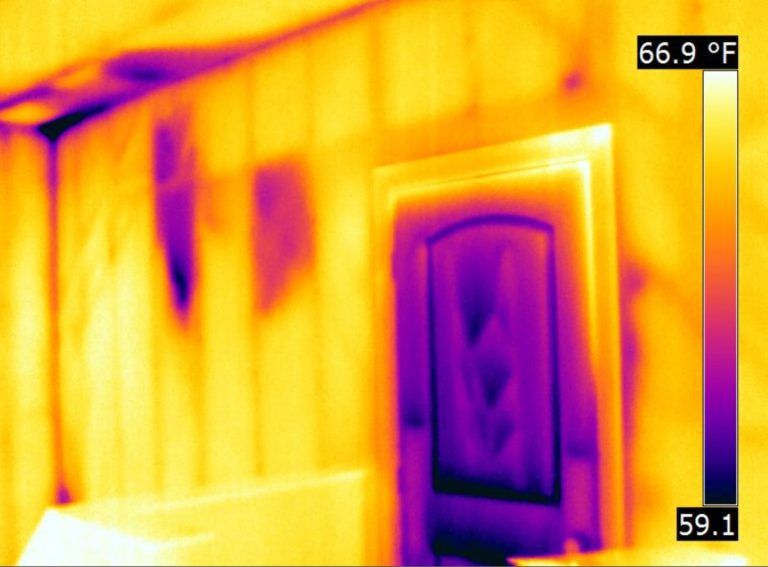
Cold air enters where weatherstripping should keep it out.
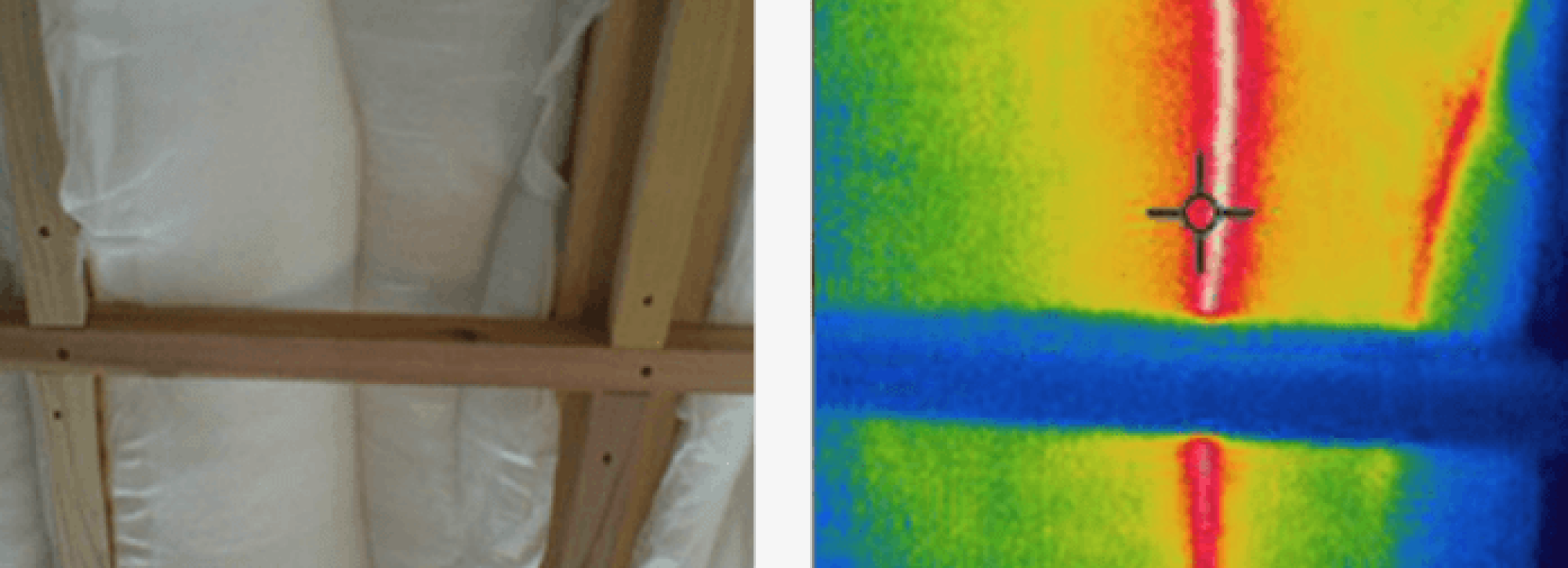
Thermography is also very useful to check the insulation installation work. In the image below, the insulation seams are sufficiently compacted at first, but thermography reveals that air is still circulating.
Humidity
Moisture leaks in a building are the most likely cause of a cold spot, as are air leaks, and are equally detectable with thermography. Any experienced building owner or inspector will know how important it is to check for moisture and the problems it can cause.
Bathrooms, kitchens, laundry rooms, basements, attics and exterior walls are exposed to moisture on a regular basis and are susceptible to damage from prolonged dampness. Moisture can enter through cracks in exterior walls, plumbing leaks, faulty HVAC systems, condensation and other factors. All of these can lead to mold growth, which in turn can cause structural damage and health problems, so it is very important to inspect potential problem areas and intervene before remediation becomes costly.
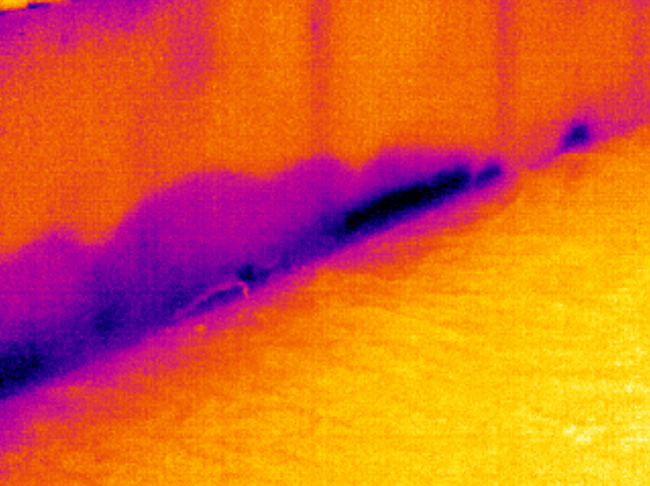
Moisture spread along a wall.
Thermography is excellent for detecting signs of water damage, but should not be used alone in an inspection. Moisture meters should be used in combination with a thermal imaging camera to accurately measure the presence of water. A thorough inspection can easily be achieved with a tool such as the FLIR MR265, which combines thermography and moisture measurement in one device.
The FLIR MR265 provides thermal imaging and humidity detection without pins and needles.

Tools for the job
To perform a proper inspection of a house or building, you need the right tools. FLIR manufactures a wide variety of products suitable for all levels of use. Whether you are a new homeowner, a professional inspector, or someone in between, FLIR has the right device for your level of experience.

This small thermal camera connects to your smartphone and gives you powerful thermal vision in the palm of your hand. FLIR Edge offers thermal and visible light cameras and features VividIR™, an advanced camera processing feature that includes combining multiple images for more thermal data. The additional context provided by VividIR™ allows anyone to start looking for air leaks and other problems, such as lack of insulation or other common issues homeowners encounter, including water intrusion or common pests that build homes in walls, crawl spaces or even siding.
An alternative to the FLIR ONE®, the FLIR C5 thermal imaging camera is a rugged, pocket-sized thermal imaging camera. The C5 is especially useful for inspecting older, energy inefficient homes, thanks to its ability to inspect hot fuses, air leaks, plumbing problems and more. This camera has a 1-Touch Level/Span, temperature range of -20 to 400°C, can be dropped from two meters, and is IP 54 rated to repel dust, dirt and weather. FLIR Ignite cloud also comes with the FLIR C5 which allows you to store and organize your images online for easy access.

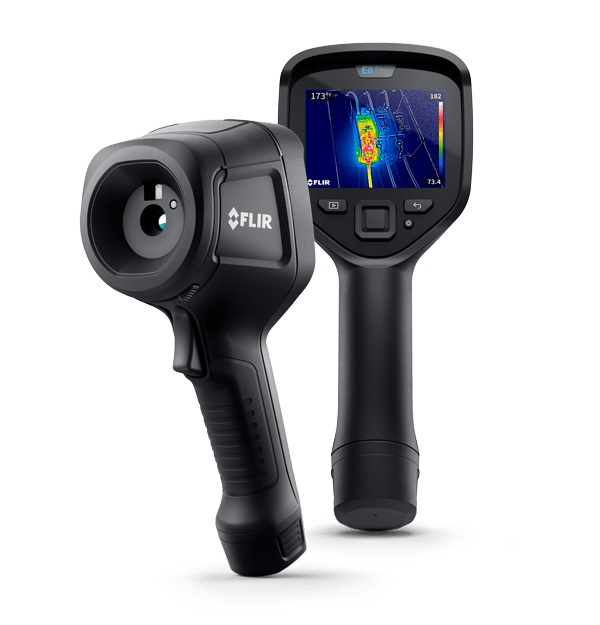
The Ex-Pro Series is ideal for diagnosing electrical, mechanical, and construction problems for professional inspectors. This camera series features a 320 × 240 pixel thermal detector, simplified reporting via a built-in microphone for voice annotation, and is fully compatible with FLIR Ignite to keep all your files backed up and available in the cloud. The Ex-Pro Series enables its users to detect unseen performance issues before they become problems, allowing maintenance teams to proactively optimize energy efficiency in homes or your business.
Whatever you need to inspect and whatever your level of thermal imaging expertise, FLIR has you covered. From insulation and detachment inspections to moisture detection, thermal imaging cameras can provide a wide range of information when inspecting the health of a building. Anyone who wants to learn more about their home or facility can pick up a thermal imaging camera and start looking.
Related entries

Energy Efficiency Building Regulations in Spain
In Spain, as in many other countries, the construction sector is regulated by a series of rules and regulations related to the efficiency of the building industry.

Challenges in steel production that FLIR can solve
From building materials to automobiles to tools, it would be hard to find an area of our lives that does not depend on steel production. Producers of steel

Combating rising energy costs with thermal imaging cameras
The global energy crisis is having a significant impact on households and businesses in Europe, and many are concerned about the uncontrolled growth of their energy costs.