
For decades, industrial maintenance has been viewed as a necessary evil—an activity focused primarily on meeting regulatory requirements, avoiding penalties, and responding to breakdowns after they have already occurred. This essentially reactive approach has shaped the way assets are designed, operated, and maintained across much of the industry.
However, the current context has changed profoundly. The sustained rise in energy prices, the increasing complexity of facilities, regulatory pressure regarding safety and the environment, and the need to ensure operational continuity make it necessary to rethink this model.
Today, the key question is no longer how much maintenance costs, but how much value is lost when it is addressed too late, poorly, or without reliable information.
The Cost of Choosing an Inappropriate Type of Maintenance
A significant portion of economic losses in the industrial sector does not stem from major catastrophic failures, but rather from gradual deterioration that goes undetected until it is too late. Overheating, energy losses, mechanical misalignments, or faulty connections can develop silently until they lead to breakdowns, downtime, collateral damage, and premature equipment replacement.
In addition to this economic impact, there is another, less visible one: increased energy consumption and a larger environmental footprint. Industrial machinery and worn-out equipment consume more energy, generate more waste heat, and have a shorter service life, thereby increasing both operating costs and the emissions associated with their operation and replacement.
In this scenario, limiting maintenance to “repairing when something breaks” introduces unnecessary risk into industrial operations. Choosing the right type of maintenance and combining preventive, predictive, and corrective strategies makes it possible to anticipate breakdowns and reduce their impact.
From One-Time Interventions to an Industrial Maintenance Strategy
The natural evolution of this model is to adopt a lifecycle-based approach to asset management. International standards such as ISO 55000 state that assets should be managed by considering their design, operation, maintenance, and disposal as a coherent whole, aligned with the technical, economic, and safety objectives of the organization.
From this perspective, maintenance is no longer an isolated activity but becomes part of an industrial maintenance strategy aimed at maximizing the value of the asset over time.
The goal is no longer simply to reduce the cost of a specific intervention, but to optimize the total cost of ownership, minimize failures, plan maintenance tasks, and extend the useful life of assets.
This approach allows for decisions based on real data: when to intervene, which equipment to prioritize, when to replace an asset, or where to invest to improve facility efficiency.
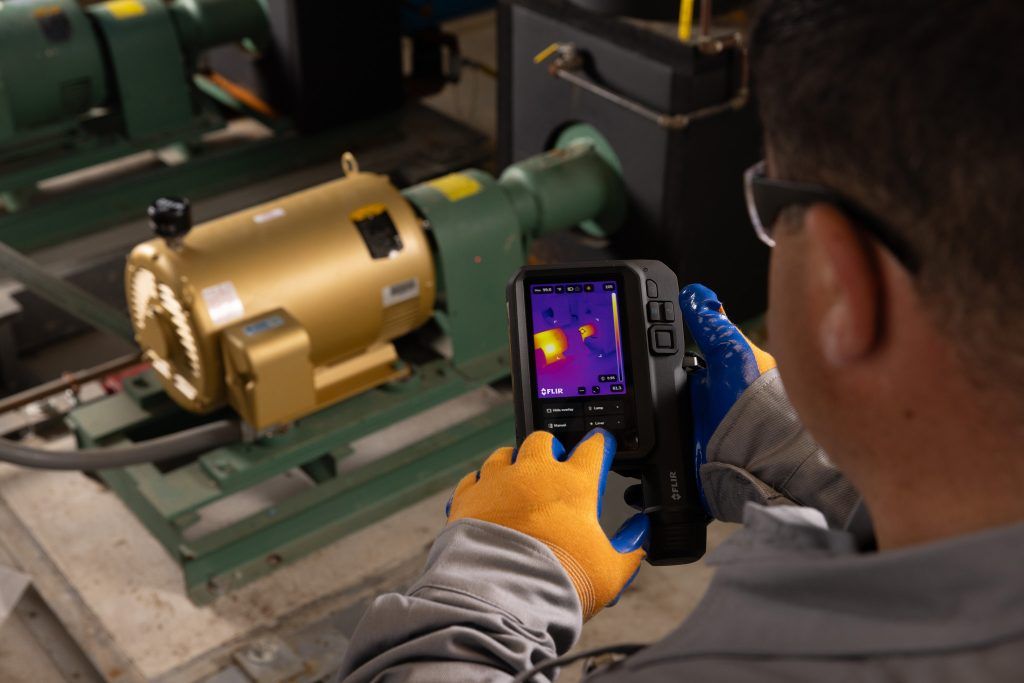
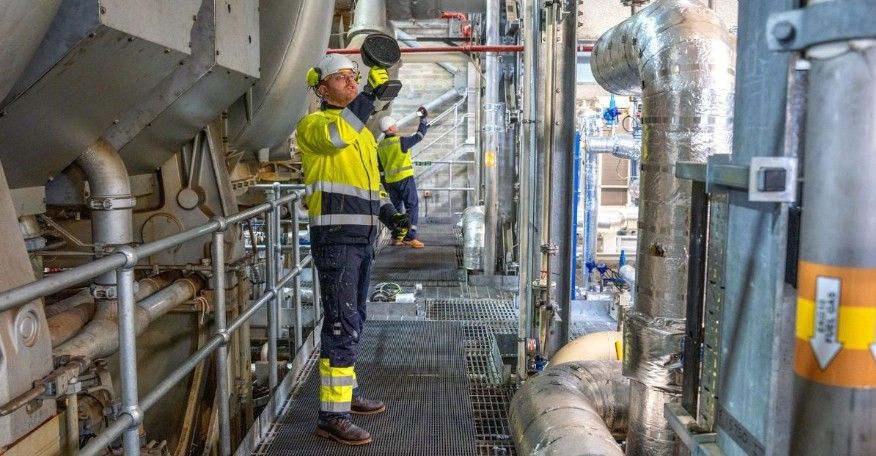
Types of industrial maintenance: preventive, predictive, and corrective
Among the various types of industrial maintenance, predictive maintenance allows for action to be taken based on the actual condition of the equipment, rather than only when a breakdown occurs or according to predefined periodic intervals.
Various diagnostic techniques can be used for this purpose, such as vibration analysis, sensor-based monitoring, and industrial thermography. The latter allows for noncontact inspections and the identification of thermal anomalies in electrical systems, machinery, and industrial facilities before they lead to more serious failures.
The goal is not to replace other types of maintenance, but to have more information available so that maintenance can be scheduled when it is truly necessary.
Industrial Thermography Applied to Predictive Maintenance
Various inspection and diagnostic techniques can be used to determine the condition of equipment, such as vibration analysis, sensor-based monitoring, and industrial thermography.
Thermography enables noncontact inspections and helps identify thermal anomalies in electrical systems, industrial machinery, and industrial facilities before they lead to more serious failures.
As part of a predictive maintenance program, this information helps detect deviations, plan interventions when they are truly necessary, and track the performance of assets.
What is the purpose of industrial maintenance beyond preventing breakdowns?
One of the great myths of industrial maintenance is that improving safety or sustainability necessarily leads to higher costs. In practice, the exact opposite is true when maintenance tasks are planned based on technical criteria.
Acting early on incipient defects reduces the likelihood of emergency interventions, which are often more costly, more dangerous, and more disruptive. At the same time, improving the condition of assets reduces energy losses, stabilizes the production process, and decreases personnel exposure to risky situations.
From an economic standpoint, these improvements result in fewer unplanned outages, greater facility availability, and more efficient use of resources. From an operational standpoint, they provide predictability and control. And from a strategic perspective, they strengthen the organization’s resilience in the face of an increasingly demanding environment.
From Industrial Maintenance as a Cost to a Strategic Investment
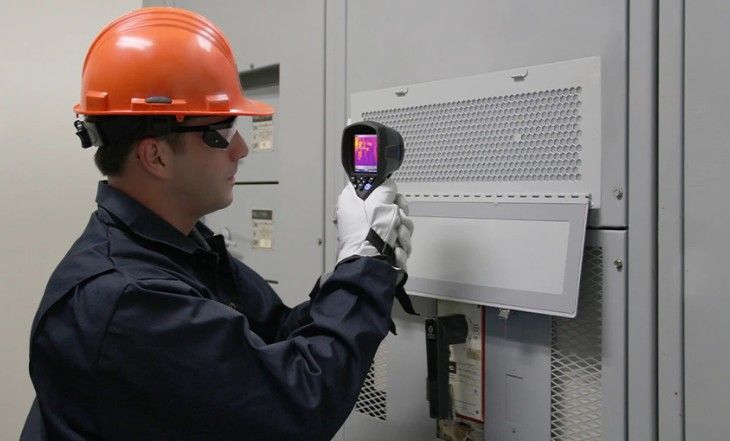
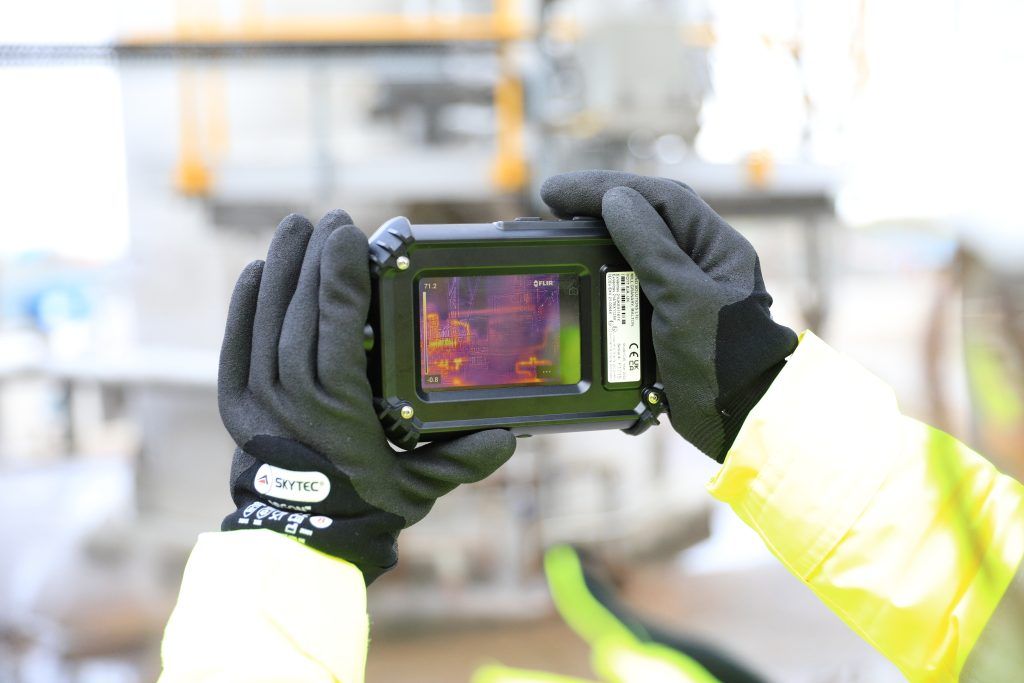
Understanding maintenance as an investment does not mean indiscriminately increasing the budget or introducing complex solutions without justification. It means investing better, prioritizing actions that provide information, reduce uncertainty, and allow problems to be anticipated before they materialize.
This shift in mindset is particularly important in industrial settings where asset reliability is critical. Experience shows that organizations that adopt proactive approaches not only reduce costs in the medium term but also extend the useful life of their assets, improve their safety performance, and increase their adaptability.
Ultimately, shifting from viewing maintenance as a cost to viewing it as a strategic investment is not a matter of following a trend, but rather a logical response to today’s industrial reality. Properly combining preventive, predictive, and corrective maintenance makes it possible to build more efficient, safer, and more sustainable facilities without sacrificing profitability or operational control.
How much are preventable breakdowns and unexpected downtime costing you today?
We help you identify opportunities for improvement in reliability, energy consumption, and safety in your electrical installations.