
Industrial thermography is an advanced inspection technique that allows the surface temperature of an object or structure to be analyzed by detecting its infrared radiation. Using thermographic cameras, thermal images are generated in which areas of different temperatures are represented, facilitating the identification of anomalies in electrical, mechanical and structural systems.
Its use is increasingly common in sectors such as industry, construction, energy and healthcare, where it contributes to safety, energy savings and resource optimization. Thanks to thermography, companies can adopt predictive maintenance strategies, reduce operating costs and ensure the efficient operation of their infrastructures.
If before discovering all its applications you want to know in detail and go deeper into the basics of infrared thermography and thermal imaging cameras, see our article What are thermal imaging cameras?
1. Industrial thermography in predictive maintenance
Predictive maintenance is a key strategy in modern industry, as it makes it possible to anticipate equipment and system failures before they become serious breakdowns. Unlike corrective maintenance, which involves repairing a failure after it occurs, predictive maintenance detects anomalies in their early stages, allowing action to be taken before the problem causes interruptions in production or costly damage to machinery.
In this context, infrared thermography has become an essential tool, as it makes it possible to visualize temperature differences in electrical and mechanical equipment and production systems. Overheating in a component can be an early sign of wear, a bad connection or an overload. Thanks to thermographic inspection, technicians can identify these problems accurately and quickly, without the need for physical contact or stopping machinery.
Inspection of electrical systems with thermal imaging cameras
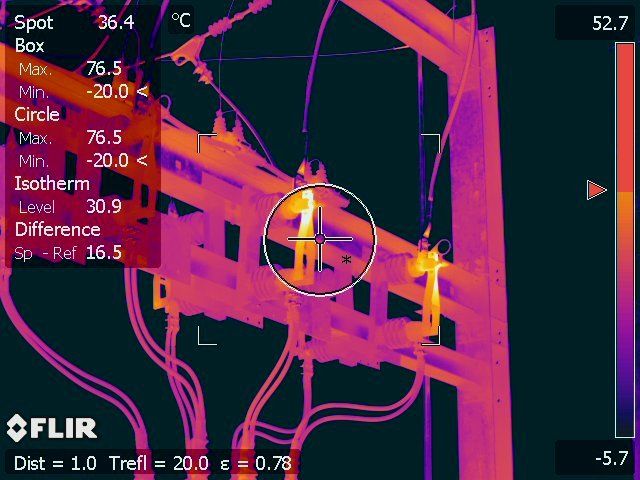
Electrical faults are a major cause of industrial fires and unplanned downtime. A loose connection, a faulty fuse or an overload in a circuit can generate overheating zones which, if not detected in time, can lead to short circuits, power distribution failures or even fires.
With a thermal imaging camera, technicians can inspect electrical panels, transformers, high-voltage cables, circuit breakers and other electrical components in real time, identifying hot spots that indicate possible faults. This not only improves the safety of installations, but also allows maintenance to be planned efficiently, avoiding unexpected interruptions in production.
Maintenance of engines and industrial machinery
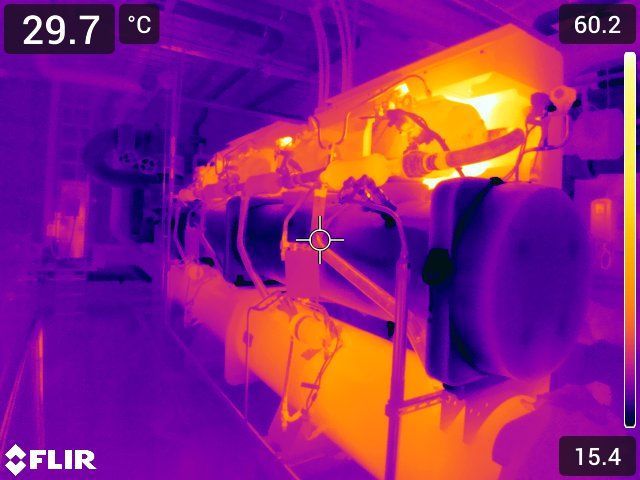
Overheating in electric motors, compressors, bearings and transmission systems is a clear sign of wear, inadequate lubrication or mechanical misalignment. If not detected in time, these problems can lead to production downtime, serious mechanical failures and high repair costs.
Infrared thermography allows maintenance engineers to monitor the temperature of these components in operation, detecting areas of abnormal friction, heat build-up or heat dissipation failures. With this data, interventions can be scheduled before a breakdown occurs, reducing the risk of unplanned downtime and extending the service life of machinery.

Learn more about predictive maintenance and the advantages of applying it in your industry by clicking below.
2. Thermography applications in industrial installations
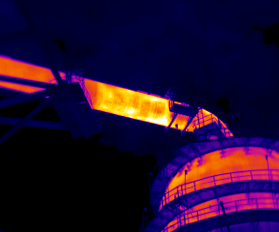
Industrial facilities have air conditioning systems, piping and thermal processes where temperature plays a key role. Small leaks or defects in insulation can lead to energy inefficiency, production failures and unnecessary costs.
Infrared thermography makes it possible to locate these problems quickly and accurately, facilitating interventions before they lead to economic losses or operational risks.
Detection of thermal leaks and insulation defects
Industrial air conditioning, refrigeration and heating systems must maintain precise temperature control. If there are heat or cooling losses, energy consumption increases and the equipment operates in inefficient conditions.
Infrared thermography makes it possible to inspect pipelines, cold rooms, industrial furnaces and ventilation ducts, accurately detecting thermal leaks or insulation failures before they impact performance.
Supervision of thermal processes in manufacturing
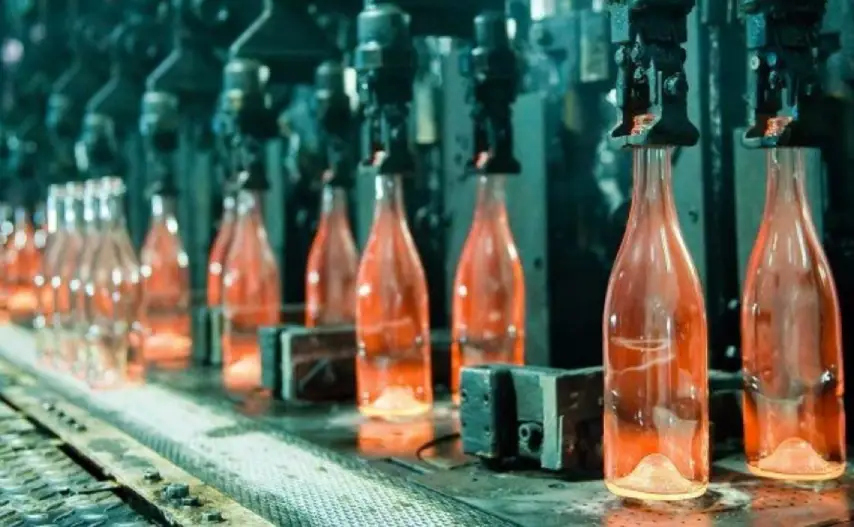
In industries where temperature influences the transformation of materials, such as the manufacture of glass, metals, plastics and ceramics, it is essential to control the thermal ranges during the production process.
An excess or deficit of temperature can affect the strength of the material, cause deformations or generate structural defects. Thermography makes it possible to verify in real time how heat is distributed in furnaces, molds and cooling processes, ensuring that materials are treated under optimum thermal conditions.
Quality control
Quality control through thermography allows to verify that products meet the required standards, identifying thermal defects that could affect their performance or safety. In sectors such as metallurgy, automotive or electronics, it is used to ensure that materials have been treated at appropriate temperatures and that heat dissipation systems are working properly.
In the food industry, thermography is used to monitor refrigeration, freezing and pasteurization processes, ensuring that temperatures are homogeneous and avoiding alterations that could compromise product quality. It is also used to inspect packaging and heat seals, verifying that food preservation is optimal throughout the production and distribution chain.

Inspection of pipelines and fluid conveyance systems
Industrial pipelines transport liquids and gases essential to the operation of production plants. If there is a leak in a steam, hot water or gas pipeline, it can represent a safety risk and a significant economic loss.
With thermal imaging cameras, technicians can inspect large pipeline networks and detect hidden leaks, heat buildup or blockages in the flow of fluids quickly and without interrupting production.
3. Thermography in building and construction
In the construction sector, infrared thermography has become a key tool for assessing the structural quality of buildings and improving their energy efficiency.
Assessment of the energy efficiency of buildings
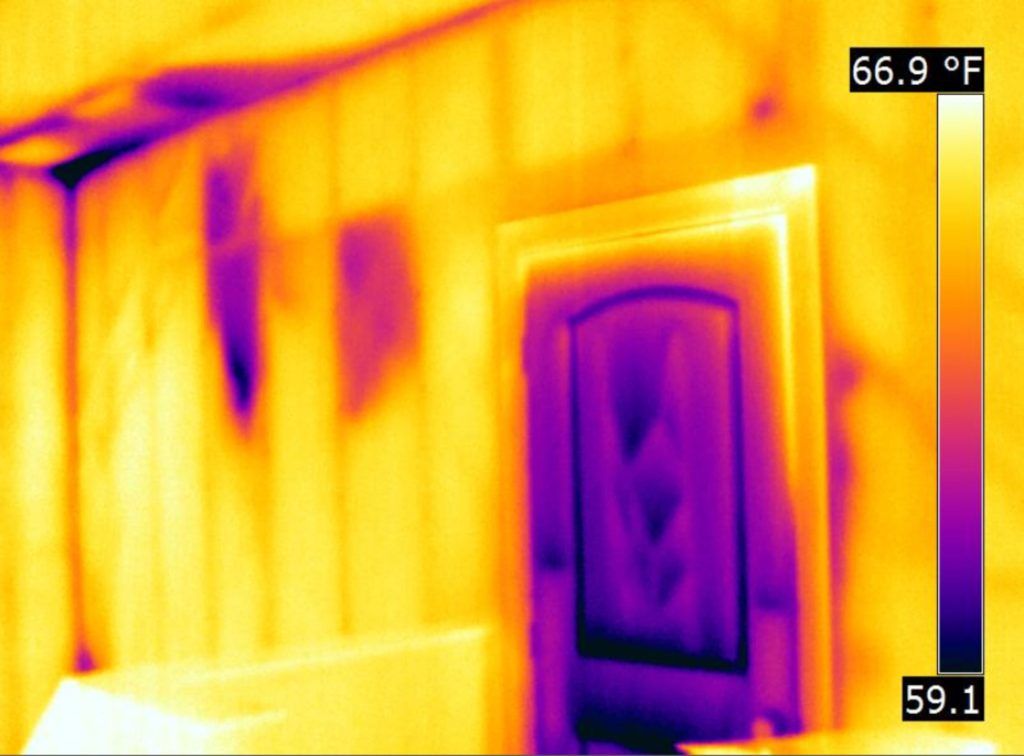
Energy loss in a home or commercial building can represent a considerable increase in heating or air conditioning costs. With a thermal imaging camera, it is possible to identify air leaks in windows and doors, thermal bridges in walls and ceilings, and insulation defects.
Detection of dampness and structural damage
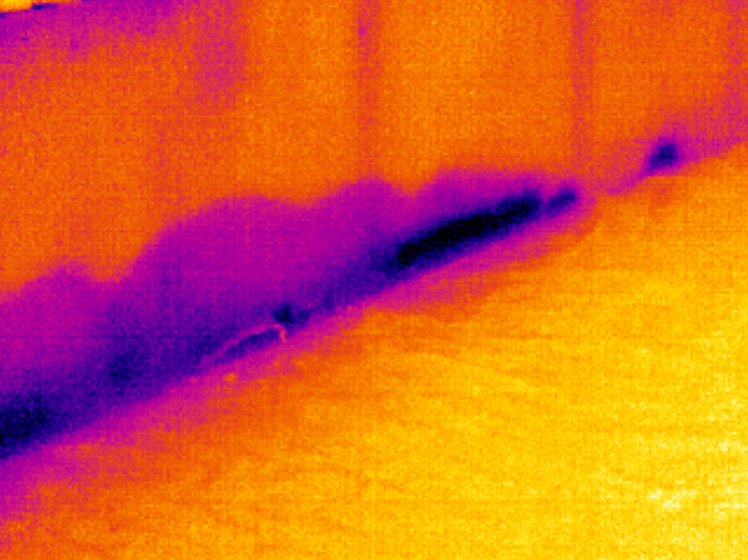
Hidden dampness can be difficult to detect with the naked eye, but it can weaken the structure of a building and encourage the growth of mold and mildew. Thanks to thermography, areas with moisture accumulation can be identified and corrective action can be taken before the problem worsens.
4. Applications of thermography in renewable energies
The performance of renewable energy installations depends to a large extent on the condition and operation of their components. Thermography has become a key tool for the inspection and maintenance of solar and wind systems.
Supervision of solar panels
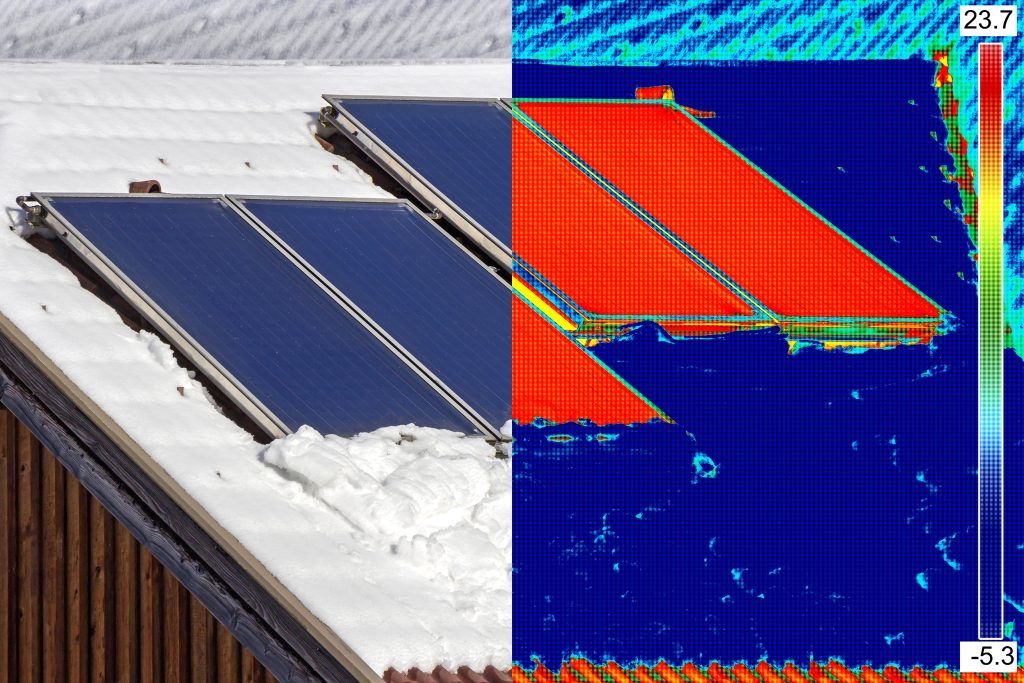
Photovoltaic plants are exposed to environmental factors that can affect the performance of your solar panels. Dirt, partial shading and cell failures can generate hot spots that reduce energy production.
Thanks to thermography, it is possible to inspect solar panels in real time and detect anomalies in their operation. Thermal imaging cameras can identify areas of overheating and determine whether the problem is due to a faulty cell, a damaged connection or a dirt accumulation problem.
Wind turbine inspection
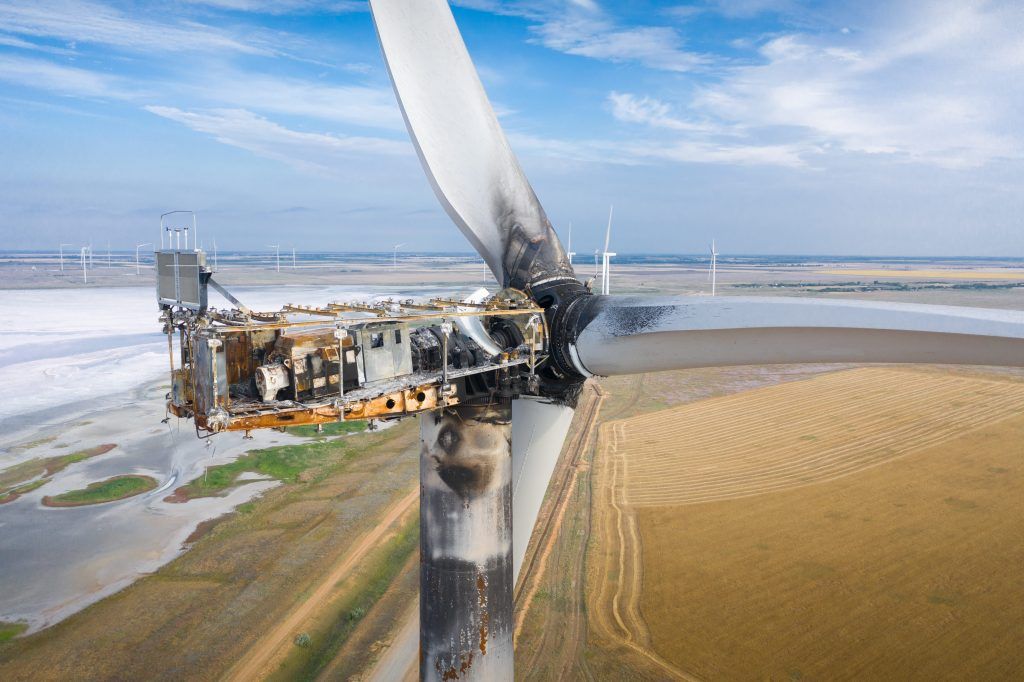
In wind farms, maintenance of wind turbines is essential to ensure their safety and operational efficiency. With thermography, technicians can inspect wind turbine blades, generators and bearings, detecting signs of wear, abnormal friction or mechanical component failure before a serious breakdown occurs.
The use of drones with thermal cameras has made it possible to speed up the inspection of wind turbines in remote locations, reducing maintenance time and improving technician safety.
5. Applications of thermography in medicine and veterinary medicine
Thermography has proven to be a useful tool in the healthcare setting, as it allows non-invasive, non-contact assessment of changes in body temperature. Its use has been extended in human and veterinary medicine for early detection of anomalies, monitoring of treatments and optimization of clinical diagnosis.
Thermography in medicine
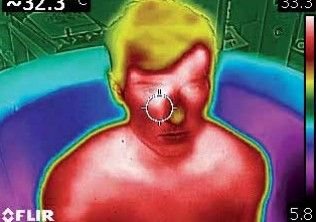
In medicine, thermography is used for the detection of thermal alterations associated with inflammation, circulatory disorders and musculoskeletal injuries. It is also a screening method in epidemiological control, allowing the identification of temperature changes in patients without the need for physical contact.
Veterinary thermography
In medicine, thermography is used for the detection of thermal alterations associated with inflammation, circulatory disorders and musculoskeletal injuries. It is also a screening method in epidemiological control, allowing the identification of temperature changes in patients without the need for physical contact.
6. More applications
- Rescue, emergency and surveillance operations: Permits the detection of movement in total darkness and in adverse conditions such as fog, smoke or rain, facilitating the location of people trapped in fires, landslides or low visibility environments, thus improving response times and the safety of rescue teams.
- Applications in the agricultural and livestock sector: In agriculture, thermography is used to monitor crops and optimize the use of water resources, making it possible to detect water stress in plants, failures in irrigation systems and crop diseases before they are visible to the naked eye. In animal husbandry, thermography has become a non-invasive diagnostic tool, helping to identify inflammations, infections and metabolic problems in animals as well as in the veterinary sector.
- Applications in scientific and environmental research:
Thermography is used in scientific studies to analyze thermal processes in materials, fluid behavior and chemical reactions. In the environmental field, it is used for wildlife monitoring, allowing the detection of animal populations without the need for contact and facilitating conservation studies in natural environments.
It is also applied in the detection of forest fires and control of pollutant emissions, as it allows the identification of hot spots in dry vegetation.
If you are still hungry for more, check out our free guides, case studies and many examples of the most representative applications of thermography in industry from expert thermographers.