
A water treatment facility may seem like an unlikely place for a fire to start, but the waste they handle can produce large amounts of methane gas. Flammable methane gas is used to generate power and power the power grid. Alternatively, biogas can be upgraded to feed directly into the national gas grid.
Fires and explosions can endanger human lives and severely affect water supply and sewage infrastructure. In fact, when an explosion occurred at a water treatment plant in Avonmouth, UK, in 2020, four workers died, making fire and explosion hazards no longer a theoretical concern but an immediate mandate for suppliers.
So how can water treatment plants manage this chronic explosion risk?
They must incorporate robust security measures into their treatment processes. One way to do this is to use certified thermal imaging to reduce the risk of methane ignition.
How the UK's largest water and sewerage treatment company manages methane
Anglian Water is the UK's largest water and sewerage company by area, supplying 2.5 million homes and 110,000 businesses through a network of water treatment plants.
With an average consumption of 350 litres of clean water per day, this network is under constant pressure. Anglian Water's sludge treatment centres, 1,100 water recycling plants and 8,000 pumping stations work 24/7 to remove contaminants from wastewater and prevent taps from drying up.
What is sludge?
Sewage sludge is the material waste of wastewater once separated from the water that transports it. It is largely made up of industrial wastewater, human feces, and other organic matter such as fats, oils, and food scraps.
Once the waste has been properly cleaned back into the environment and the water has been pumped back into the water supply, the sludge is processed by anaerobic digestion. In this process, waste is broken down in an oxygen-starved environment and broken down into its building blocks by natural bacteria, a process that generates methane gas as a byproduct.
This biogas methane can then be used to generate renewable electricity or natural gas as fuel, heat or power.
How Thermography Is Reducing the Risk of Explosion in Wastewater Treatment Plants
Due to the potential for flammable methane in situ, wastewater treatment plants that process sludge are classified as potentially explosive environments, resulting in "risk areas" under the ATEX directive.
This means that strict procedures are in place to limit risk and reduce the chance of fires and explosions. In these environments, a hot work permit is typically required.
A hot work permit is a detailed document that must be completed by preventive maintenance technicians, assessing the risks of a site and detailing how they plan to inspect and overhaul specialized equipment. However, as these permissions must be signed by management and are only valid for one shift at a time, the process can be time-consuming and allows problems to worsen without intervention.
Anglian Water is avoiding the need for hot work permits for asset inspections by using thermal imaging cameras specifically designed to be used safely in Zone 2 ATEX environments. The company uses several FLIR thermal imaging cameras to maintain robust safety measures in gas monitoring, saving time and man-hours. FLIR thermal imaging cameras allow them to instantly inspect machinery without the need for prior approval, as the camera is certified to prevent ignition of any atmosphere, thus protecting both operators and assets.
Ian Spriggs MIET, Director of DSEAR at Anglian Water Services Limited and a member of CompEx's technical advisory board, explains how the team uses thermography to reduce risk and improve safety:
"We use a combination of vibration analysis and thermal imaging to carefully inspect mechanical assets in at-risk areas and ensure maintenance has been carried out correctly.
It is vital that the thermal imaging cameras we use to inspect the ignition risk of mechanical assets do not pose an ignition risk in and of themselves." FLIR is the well-known brand of thermal imaging, so we were very lucky that the FLIR Cx5 was launched just as we started consulting about a robust piece of equipment that would fit what we needed."
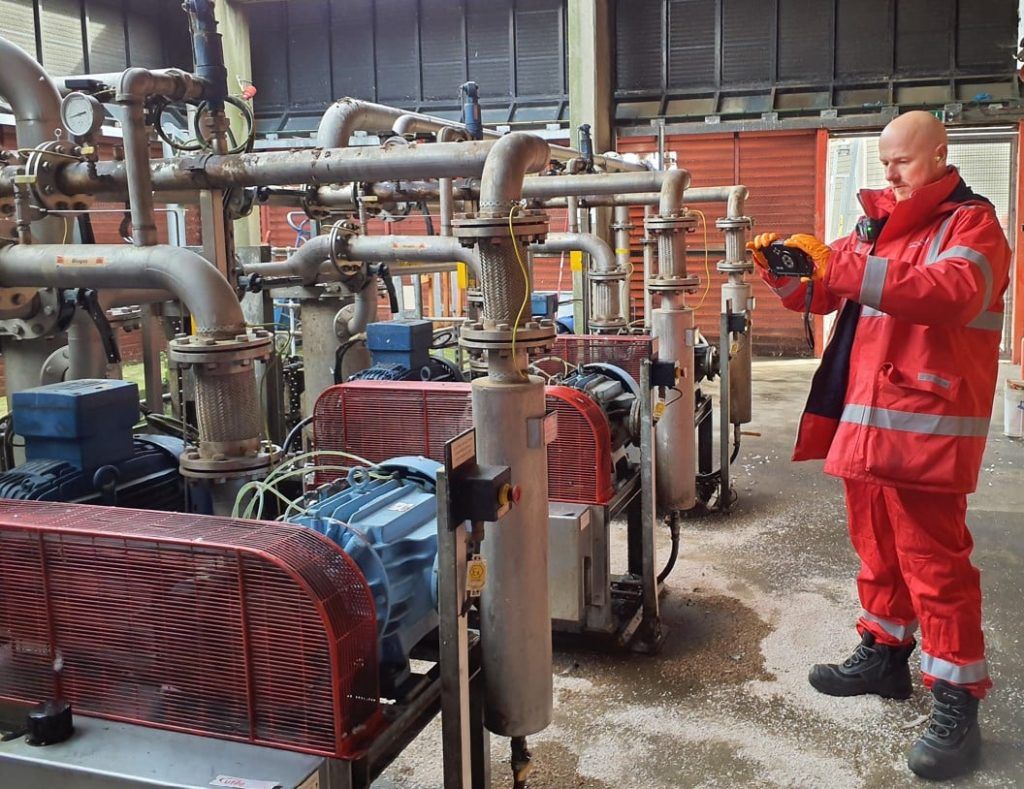
HSE interventions with the FLIR Cx5 thermal imager
The FLIR Cx5 enables at-risk facilities to meet their insurance obligations by limiting risk in potentially explosive environments and produces detailed analyses of mechanical and electrical components. It generates reports that attach sharp thermal images for illustrative purposes, making it easy to communicate concerns to higher levels for approval of critical maintenance issues.
"If you were to undergo an HSE intervention, the inspector might say 'give me the whole history of that asset,'" explains Ian. "This doesn't cover a certain period, but the entire life of that asset. Now, with the FLIR Cx5, we can clearly see the maintenance processes."
"Anglian Water's team of in-house engineers uses the FLIR Cx5 camera to perform checks on mechanical and electrical assets as part of a three-year inspection cycle that is performed to reduce risk."
Thermography: The "Next Evolution" of Inspection
Ian Spriggs is actively involved in a number of internal and external groups, such as the CompEX non-electrical working group, which drives improvements for mechanical competence associated with hazardous areas.
As part of his expert vision in this field, he recommends that certified thermography be integrated into a standard approach to the inspection of mechanical equipment in hazardous areas.
"The standards for mechanical assets lag far behind the electrical ones and need to catch up. I recommend that thermal imaging be used in hazardous environments to reduce risk and provide more possibilities for faster and safer inspections across facilities around the world."


