
The main objective of an industrial maintenance manager is to keep machines at full performance without breakdowns. Although it is impossible to prevent 100% of breakdowns, we can minimize them if we are able to detect them before they occur. For this reason, companies that implement a good industrial maintenance plan improve their performance and, in turn, save costs to the company.
At first it may seem overwhelming to decide how to start defining an industrial maintenance plan that will improve the results obtained so far, but if you follow these 5 simple steps that we have prepared for you, it will be much simpler.for you, it will surely be much simpler..
1. Start by defining clear and real objectives.
When we talk about elaborating an industrial maintenance plan, the first thing we must be clear about is what objectives we want to achieve. It is not enough just to make a list of wishes; these have to be concrete, clear and realistic. Defining the main and secondary objectives, being clear about who will be in charge of each of the tasks, marking the work timings of each task or knowing which tools we are going to use for each intervention must be the guiding principles of the Plan for it to be useful and effective.
On the other hand, we will always have to define what can fail within the Industrial Maintenance Plan in order to have a forecast. This will help us to understand what the equipment we have to work with is like and to take into account the different scenarios we may encounter.
2. Plan well all the interventions to be carried out
Calculating maintenance frequencies is vital to be able to prepare a good industrial maintenance plan for your company. Depending on the continuous use of a machine, it is very important to know if we must perform daily, monthly, annual or accumulated operating hours maintenance, in case of machines that are not used continuously.
Assessing what type of maintenance is the most appropriate for each machine and how much time is needed to perform each intervention is also key to prepare a good industrial maintenance plan. Obviously, it will not take the same amount of time to check the electrical panels as it does to check all the mechanical components of an engine.
Finally, we will also have to plan for possible production downtime and always leave a margin of error for the receipt of material purchases to avoid delays that affect our team's results.
3. Invest in technology that improves your efficiency
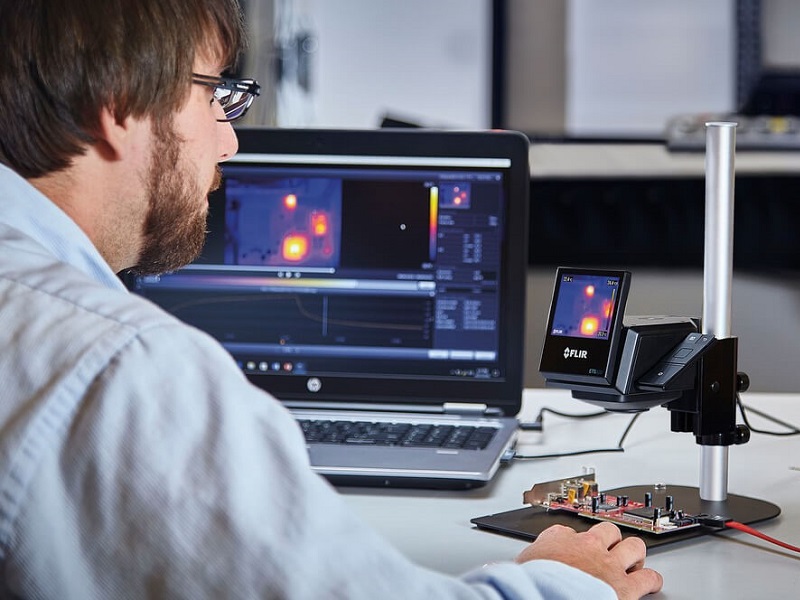
Although at first it may seem that investing in new technologies is an economic effort for the company, having the right tools will save time and money in the medium and long term. We must bear in mind that if we know how to choose the most appropriate tools, we will not only improve our efficiency, but we will also be able to detect a breakdown before it occurs. Investing in new technology such as, for example, a thermographic camera, will surely make our tasks easier and help us to improve the results of our equipment.
4. Be sure to invest in the training of your team.
It has been proven that dedicating resources to train a team of workers only brings benefits to the company. On the one hand, the worker expands his knowledge and acquires new skills and, on the other hand, increases productivity and reduces the feeling of routine and stagnation.
Invest in training in the latest technologies for industrial maintenance will not only make the worker more autonomous, so that new tasks can be delegated to him without the need for continuous supervision, but it will also improve the efficiency of the machines he supervises, and thus increase the company's productivity.

5. Periodically review your Plan to improve it
An industrial maintenance plan should be carried out annually. This does not mean starting from scratch every year, but we must update it by previously evaluating the results of the previous year and setting new objectives based on the ones we already had defined. If when assessing the objectives set we detect and evaluate what has worked and what improvements we should make, we will be able to refine the tasks and thus achieve maximum efficiency.
If after reading these steps you are able to clearly define the objectives, plan well the interventions, invest in new tools and adequate training for your workers and, in turn, detect the errors and deviations that arise, we are sure that you will leave behind the unforeseen emergency repairs, improving the efficiency and effectiveness of your team, and achieving the maintenance objectives set in your industrial maintenance plan.