How thermal imaging cameras are revolutionizing anomaly detection

Discover the cutting-edge technology behind thermal imaging cameras and how they are transforming anomaly detection in ways you never imagined.

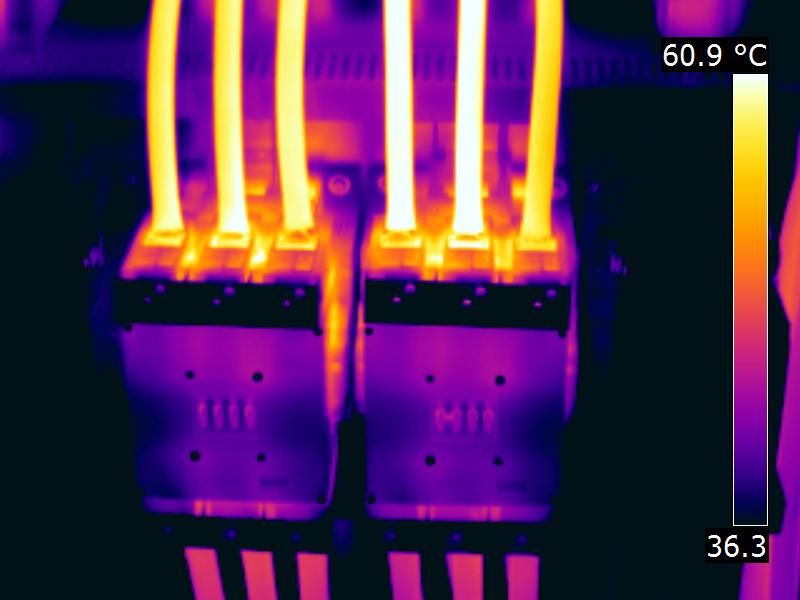
Inspection of three-phase protection with thermographic camera

Table of Contents

Welcome, maintenance enthusiasts! Today we dive into the fascinating world of thermal imaging cameras and explore their extraordinary effectiveness in detecting anomalies in various industries.

These innovative devices have become indispensable tools for maintenance, safety and quality control, and offer a powerful solution for uncovering hidden problems that could lead to costly repairs or dangerous situations.

Discover the secrets of thermography

At the heart of thermal imaging cameras is state-of-the-art infrared technology that allows them to capture heat signatures and translate them into visual representations of temperature variations. This unique capability allows users to detect anomalies that may not be visible to the naked eye, making it a revolutionary tool for industries where early detection is paramount.

Discover the power of thermal imaging technology!

Stay informed with exclusive updates. Subscribe now to our newsletter.

Unlike traditional visual inspections, thermal imaging offers a non-invasive way to identify problems such as overheating electrical components, insulation leaks or water damage. By providing a complete view of a system's thermal profile, these cameras allow operators to detect potential problems before they become acute, saving time and resources in the long run.

To learn more about the operation and characteristics of thermal imaging cameras, we recommend that you read our complete article on what they are and how they are used. our complete article on what they are and how they are used.

Applications in all sectors

From building inspections to predictive maintenance and firefighting, thermal imaging cameras have found a wide range of applications in various sectors. In the construction industry, for example, these devices are used to detect structural defects, moisture intrusion and energy inefficiencies, ensuring that buildings are safe and compliant.

In the electrical and mechanical fields, thermal imaging cameras play a crucial role in preventing equipment failures and identifying faulty components before they cause a breakdown. By performing routine thermal inspections, maintenance teams can proactively address problems and avoid costly downtime.

Thermal imaging cameras from @flir ensure welding quality in real time, avoiding defects and optimizing production.

Success in the spotlight: Real case studies

Let's look at some real-world examples of how thermal imaging cameras have made a difference in anomaly detection. In one manufacturing plant, a thermal inspection revealed a hot spot on a motor control panel, indicating a potential failure. Thanks to this early detection, the problem was quickly fixed, preventing a major equipment failure and saving the company thousands of euros in repair costs.

Similarly, in a commercial building, a thermography survey detected a water leak hidden behind a wall, allowing it to be repaired quickly and mitigating the risk of mold and structural damage. These success stories highlight the practical benefits of integrating thermal imaging technology into routine maintenance practices.

Discover more thermography success stories here

Best practices for effective anomaly detection

To get the most out of your thermal imager, it is essential to follow best practices for capturing accurate thermal images and interpreting the data effectively. Start by ensuring that your camera is properly calibrated and maintained to deliver reliable results.

When performing thermal inspections, pay attention to environmental conditions that could affect readings, such as ambient temperature and reflective surfaces. Also, learn about the specific anomalies you are looking for and how they manifest themselves in thermal images to improve your detection skills.

Discover the power of thermal imaging technology!

Stay informed with exclusive updates. Subscribe now to our newsletter.

In conclusion

As we conclude our exploration of thermal imaging cameras and their role in anomaly detection, it is clear that these devices are more than just tools-they are game changers. By harnessing the power of infrared technology, companies can uncover hidden problems, improve safety and increase operational efficiency in ways that were previously unimaginable.

Whether you're a maintenance technician, safety inspector or quality control specialist, consider adding a thermal imaging camera to your toolkit. The information it provides could be the key to discovering anomalies before they become serious and ultimately save you time, money and headaches.

Related entries

FLIR Si2X for explosive dust - vapor

Thermography applications in industry

All objects around us emit infrared radiation that can be captured and visualized with a thermographic camera. Thanks to this physical property that provides us with thermal information, we can apply infrared thermography to an infinite number of sectors. Discover examples of the most representative applications below.

Read more "
FLIR Si2X

Risk prevention in ATEX Zone 22 with FLIR Si2x

FLIR Si2x, the key to detect hazards before it's too late. In ATEX Zone 22 environments, where combustible dust can become a latent hazard, this innovative acoustic camera can locate air leaks and mechanical failures without stopping production, ensuring safety and operational efficiency.

Read more "