
Safety of workers in the steel industry and carbon monoxide conservation
Exposure to elevated levels of CO in the workplace can be hazardous to workers' health, especially in industries such as steel, metallurgy and petrochemicals. Industry also contributes to CO emissions to the environment through its process emissions and the burning of fuels for power generation. It is important for the industry to adopt safety measures to protect workers and reduce its CO emissions.
Ensuring environmental responsibility and worker safety in all production units is a top priority for steel companies of all sizes. These facilities use blast furnace, coke oven and Linz-Donawitz (LD) gases in the production process, the main component of which is carbon monoxide (CO). CO is not only harmful to the environment, but can also endanger the lives of workers.
In most plants, the gases created in the production process are reused for power generation and reheating furnaces, which means that a CO leak could be a devastating cost to the company in terms of money and energy. In addition to ensuring safe and efficient operations, many steel companies are also choosing to be environmentally responsible in their processes, which is demonstrated in some of their environmental, social and governance (ESG) programs.
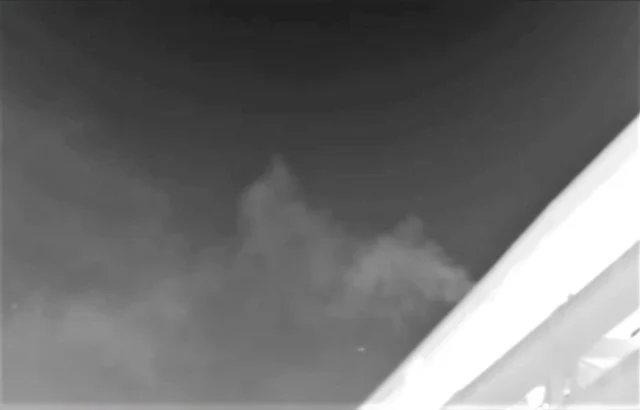

Image of a carbon monoxide leak with normal vision on the left and with sensitive vision on the right.
Proven gas leak detection technology
The gases are invisible to the naked eye and the effect of leaks is often very gradual, so identifying the source of a carbon monoxide gas leak can be difficult. Leaks can be masked by changes in airflow, making fugitive gases difficult to detect when using more traditional methods. In an effort to find a better solution, steel mill operators have a unique solution to consider: an optical gas imaging (OGI) camera.
Although optical gas imaging is not widely used in the steel industry, it is the basis for leak detection and repair (LDAR) technology used in other sectors. The utility industry uses specialized OGI cameras to detect sulfur hexafluoride (SF6) gas leaks in substations and other areas within the electrical transmission supply chain. In the oil and gas industry, where OGI was first used, this technology is routinely used for the detection of hydrocarbons and VOC gases throughout the supply chain. OGI is approved by the U.S. EPA as an alternative work practice and has even been designated as a Best System of Emission Reduction (BSER) for regulations in the oil and natural gas sectors. Companies such as Statoil, BP, Chevron and ExxonMobil use OGI cameras to detect gas leaks.
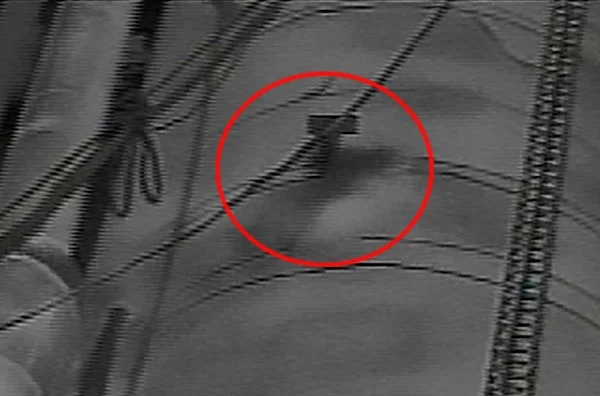
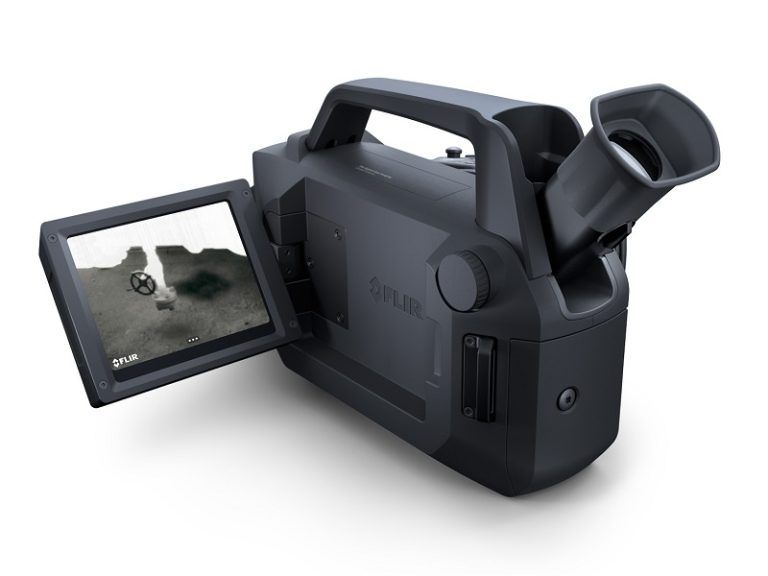
The FLIR GF346 uses a specially filtered thermal detector to visualize CO and other harmful gases. The camera can be used to quickly scan for the presence of gases over wide areas and from a safe distance, without interrupting a plant's production process. CO emissions can be a major threat to steelmaking operations, so emissions need to be closely monitored. Even the slightest leak in a chimney or vent pipe can have a devastating effect. The FLIR GF346 quickly scans potential leak points from a distance and allows the user to locate their source in real time. By ensuring that there is sufficient Delta T (temperature difference between the ambient temperature at the leaking component and the background scene) technicians can achieve the optimum image contrast needed to detect the lowest level of gas emissions using the GF346's high sensitivity mode.
Real-world examples of optical gas imaging in the steel industry
One of the main uses of the FLIR GF346 is to find hard-to-detect leaks near the smelter floor. Often, technicians are unable to detect the source of the CO gas leak in the area of the smelter plant. Sometimes, leaks start late in the afternoon, so the lack of sunlight and the frequent change of direction of the natural air flow make it difficult to locate the source of the leak. With the help of a FLIR GF346 optical gas imaging camera, inspectors can scan all possible leak point sources near gas pipelines, both inside and outside steel fabrication units.

The GF346 can find leaks in a variety of scenarios that can be up to 60 meters away from the melt plant. Gas may leak from a flange joint in a line supplying gas to the hot mill reheat furnace from the gas mixing station. One solution would be to shut down and secure the area and report the results to take immediate corrective action, preventing an incident and shutting down the source of the leak.
In addition to foundry applications, there are numerous pipelines with the potential for hazardous leaks in steel production facilities. For example, during typical LDAR scans, a user may not always find a leak in the steelmaking unit, but may extend their inspection to gas lines outside the main facility. In these situations, the FLIR GF346 can detect leaks from the main CO gas lines at a variety of points that supply gas to the hot rolling mill furnace from gas mixing stations, such as flange joints. As a result, a facility can develop a routine program to consistently scan the piping. Using the GF346 to inspect connections, joints and other potential leak points provides an effective way to further improve safety within a facility's broader footprint and reduce emissions, helping the organization meet environmental management metrics.
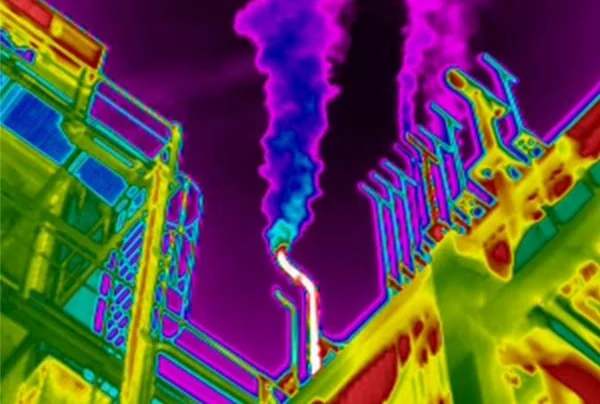
Operators in the steel industry can use the FLIR GF346 to inspect blast furnaces, which produce liquid iron for steelmaking. Blast furnaces have nozzles for hot blast supply to the furnace that are installed in the furnace casing. Frequent leakage of CO gas from these tubes creates an unsafe and unhealthy atmosphere on the tube deck and above. Inspectors can use the camera to scan all leaking nozzles from a safe distance. If a leak is discovered, operators can take immediate corrective action and upgrade the nozzles to a new welded design. After replacement, the user can rescan the area with the GF346 to confirm that the leaks have been eliminated. As a result, operating personnel now work in a safe, gas-free environment.
Hot rolling mill applications produce hot rolled sheet for automotive and LPG. The mills are powered by reheat furnaces that use carbon monoxide-rich blast furnace gas and coke oven gas as fuel. Leaks of unburned CO can be identified through the camera, and inspectors can quickly and reliably find the source of leaks at pipe joints. Once the leak is found, a technician can take immediate corrective action to eliminate the presence of CO near the furnace.
Time is money
A key advantage in using such a camera for LDAR inspections is the technology's high return on investment. Gas leaks can cost money in a number of ways: lost product, added safety costs or increased downtime. Using an OGI camera for LDAR inspections can help the steel industry streamline its processes and shutdown procedures. These shutdowns can cost a company a considerable amount of money; an OGI camera like the FLIR GF346 can show operators exactly what needs to be repaired, allowing maintenance teams to plan repairs and avoid unexpected downtime. There is also a safety element: the addition of a telescopic lens to the FLIR GF346 allows operators to search for dangerous leaks from a safe distance, keeping them out of confined/hot work permit areas. The camera can also reduce downtime by allowing operators to identify areas of concern during regular operations and then schedule more detailed inspections for planned shutdowns. Since a shop can operate 24 hours a day with hundreds of people working, the time spent looking for leaks without the benefit of an OGI camera can be considerable.
If you have any doubts about how a gas imaging camera works, take a look at our blog and Apliter's Youtube channel.
Related articles:


