
QOGI and Quantification of Gas Leaks During OGI Inspections
OGI inspection makes it possible to quickly locate leaks, but decision-making requires going one step further.
Do you know where the leak is, but not how much gas is escaping?
Quantitative Optical Gas Imaging (QOGI) combines the visualization of gas leaks using optical gas imaging (OGI) thermal cameras with the quantification of those leaks, making it possible to estimate the emission rate and better assess its magnitude.
How does QOGI work?

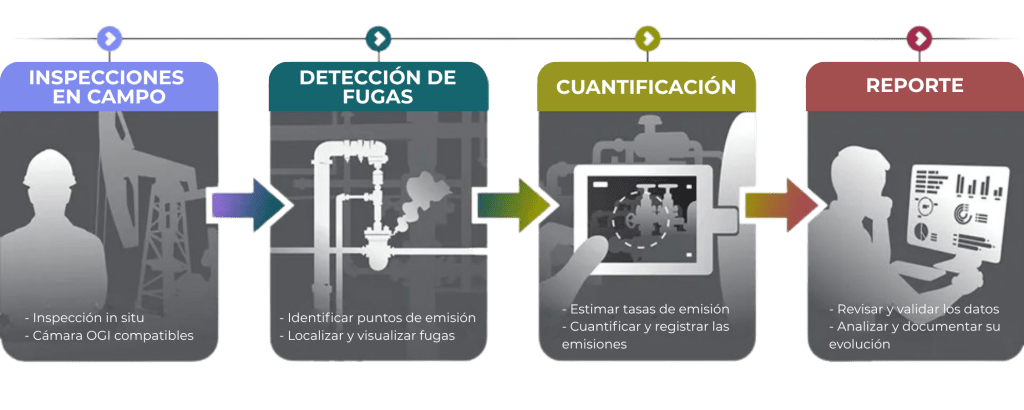
DETECT THE LEAK
The OGI camera captures the infrared radiation absorbed by the gas and makes it possible to visualize the gas plume over the inspected area.
ANALYZE THE INFORMATION
To accurately estimate the leak, QOGI takes into account various inspection parameters, such as the type of gas, the distance to the emission point, environmental conditions, and equipment configuration, depending on the methodology used.
ESTIMATE THE EMISSION RATE
Based on the information obtained, the system calculates an estimate of the amount of gas released per unit of time, generating quantitative data that allows for a better characterization of the magnitude of the leak.
QOGI as part of the inspection process
The results obtained using QOGI can be incorporated into LDAR programs, MRV workflows, and reporting processes, facilitating the monitoring of leaks, the recording of emissions, and the documentation of actions taken.
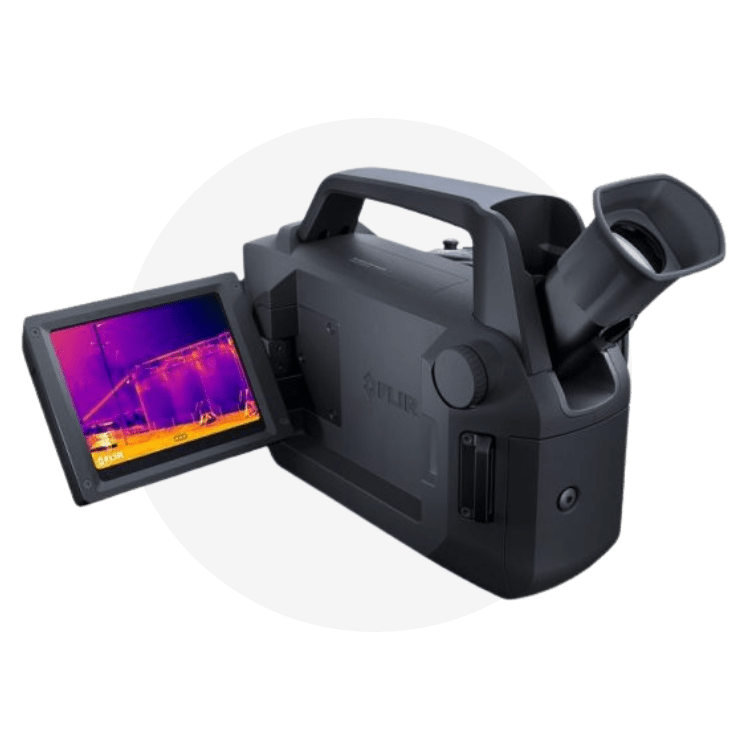
OGI Equipment for Leak Detection and Quantification
Check out the available OGI cameras and compare their features to determine which model is best suited for each type of inspection.
Why QOGI?
REGULATORY COMPLIANCE AND REPORTING
New emissions requirements, such as the European Methane Regulation, call for greater traceability and documentation. QOGI provides quantitative data that facilitates the measurement, monitoring, and reporting of emissions.
GREATER EFFICIENCY IN LDAR PROGRAMS
Understanding the extent of leaks helps prioritize the most significant ones, plan repairs more effectively, and direct resources where they are needed most. Quantifying leaks provides additional information to improve leak detection and repair processes.
GREATER SAFETY IN HARD-TO-REACH AREAS
Remote inspection makes it possible to analyze leaks in equipment that is elevated, pressurized, or located in hard-to-reach areas, thereby reducing personnel exposure during the inspection. This allows for a greater distance from the leak point in certain applications.
THE EVOLUTION FROM LDAR TO LDAQ
The incorporation of quantitative data expands traditional leak detection and repair programs, facilitating their evolution toward more comprehensive LDAQ models that integrate detection and quantification into a single workflow.
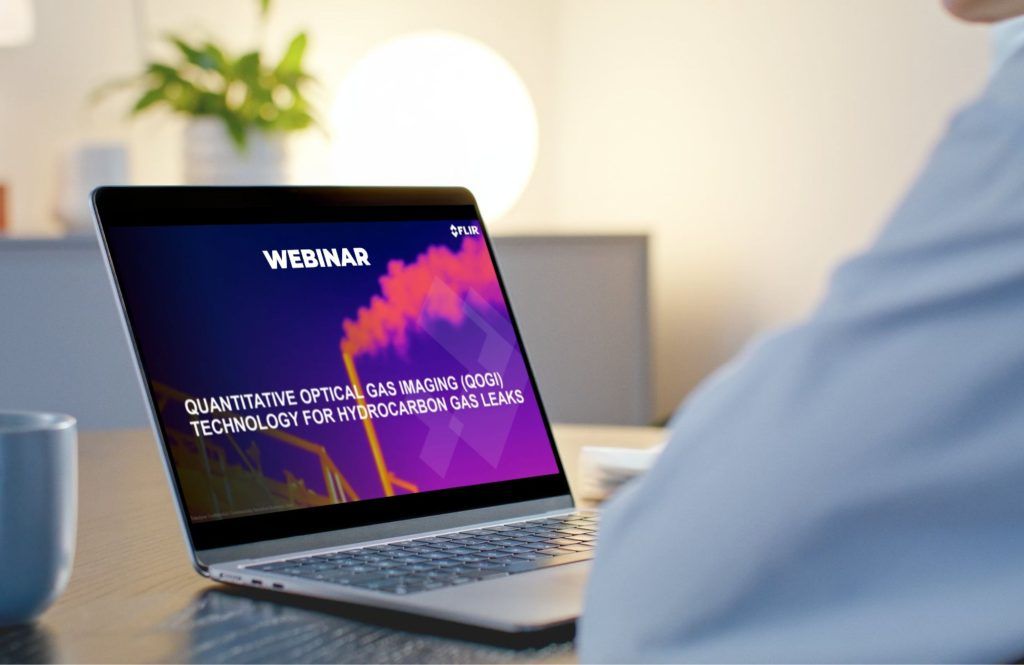
Free training and resources to learn more about QOGI
Expand your knowledge of QOGI with FLIR’s free professional training resources focused on practical application. You’ll find content on configuration, quantification methodologies, interpretation of results, and best practices for obtaining more consistent measurements under various inspection conditions.
Would you like to apply QOGI in your inspections?
We'll help you identify the OGI/QOGI solution best suited for your application and operating conditions.