Electrical utilities rely on thermography to prevent component failures
Electric utilities are often faced with an aging infrastructure. As the risk of equipment failure increases, so does the risk of unplanned maintenance costs. As part of a preventive maintenance program, thermal imaging cameras can detect these failures before they occur and keep costs under control.
If a critical failure occurs at a substation, such as an overheated transformer, it can be devastating to the utility. Sometimes, a failure leads to a widespread outage affecting thousands of customers, and repair or replacement costs can be very high.
Electric utilities are always looking for ways to improve reliability in the delivery of electric power while reducing costs. Through regular temperature monitoring using advanced thermographic cameras for diagnostics, utilities can easily inspect and control the temperature distribution on the outside surface of each substation component.
This helps them detect failures before they occur. Thermal imaging cameras can detect impending equipment failures and safety violations at any time, day or night, at a remote monitoring location.
PREVENTIVE MAINTENANCE PROGRAMS IN ELECTRIC UTILITIES COMPANIES
Thermal imaging cameras have been part of preventive maintenance programs at electrical utilities for many years. Especially in high voltage applications, thermal imaging cameras have been indispensable for detecting impending faults.
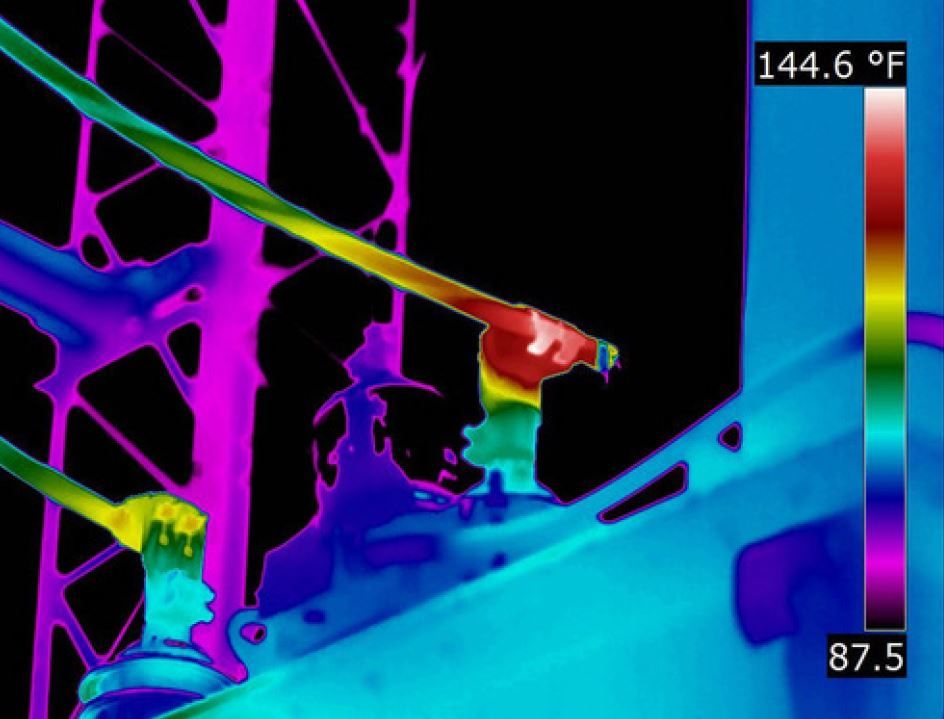
Heat is an important factor in high voltage installations. When electric current passes through a resistive element, it generates heat. An increase in resistance results in an increase in heat. Over time, the resistance of electrical connections will increase; for example, due to loosening and corrosion. The corresponding increase in temperature can cause component failure, resulting in unplanned outages and even injury.
In addition, the energy spent on generating heat causes unnecessary energy losses. If left unchecked, heat can even build up to the point where connections melt and break, which could cause a fire.
SCANNING OF CRITICAL COMPONENTS
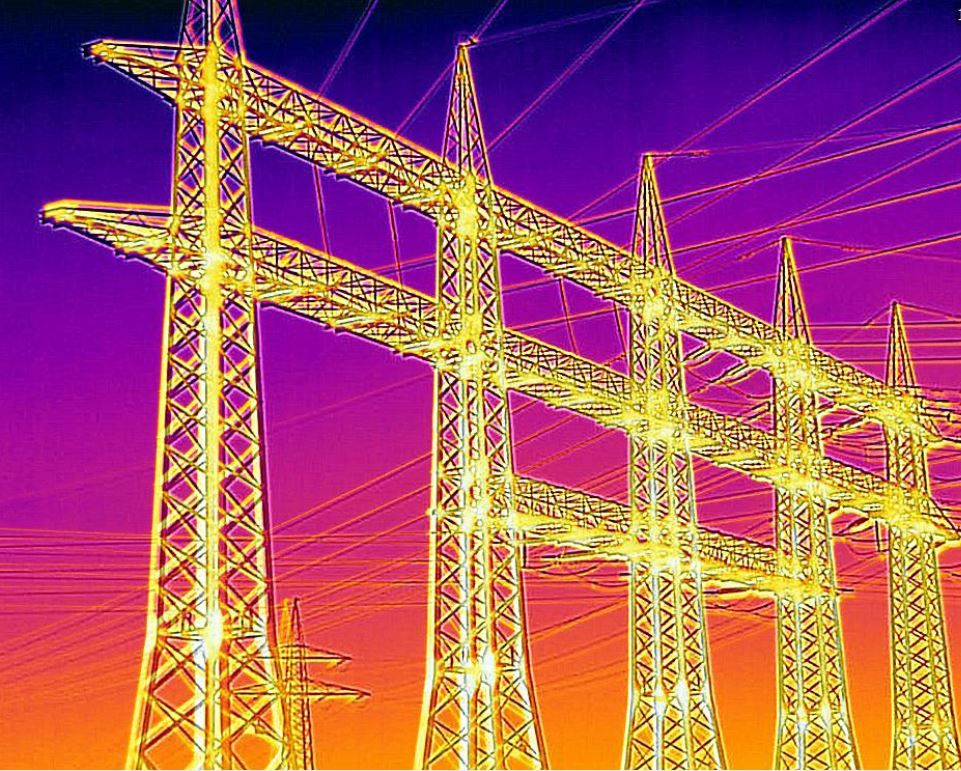
Examples of faults in high voltage installations that can be detected with thermography include:
- Oxidation of high voltage switches
- Overheated connections
- Incorrectly secured connections
- Insulator defects
Typical substation components whose thermal signatures are precursors to failure include:
- Power transformers (oil levels and pump operation)
- Bypass load changers (oil levels and other internal problems)
- Insulating bushings (oil levels and bad connections)
- Support isolators (humidity, contamination, degradation)
- Lightning arrester (degradation of metal oxide disks)
- Circuit breakers (oil or SF6 leaks)
- Mechanical disconnections (bad connections, contamination)
- Control cabinets (wear on fans, pumps and other components)
- Batteries
These and other problems can be detected at an early stage. A thermography camera will help maintenance operators pinpoint the problem, determine its severity and establish the period in which the equipment should be repaired.
ADVANTAGES OF THERMOGRAPHY
Thermal cameras show what the human eye cannot see. Hot spots usually indicate overheated parts, allowing maintenance workers to see where they need to investigate further.
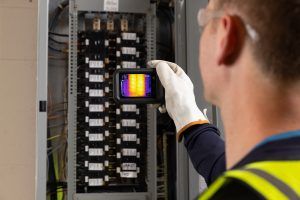
One of the many advantages of thermography is the ability to perform inspections while electrical systems are in operation. Since thermography is a non-contact diagnostic method, a thermographer can quickly scan large areas of equipment from a safe distance, leave the hazardous area, return to his office and analyze the data without putting himself at risk.
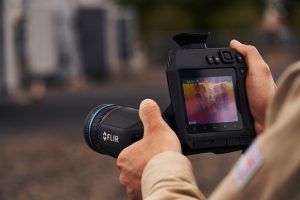
Because FLIR thermal imaging cameras are all portable and battery operated for industrial applications, they can also be used for outdoor inspections. High-voltage substations, distribution boards, transformers and circuit breakers outdoors can be inspected quickly and efficiently with a FLIR thermal imaging camera.
CASE STUDY: BUSHING MAINTENANCE AND INSPECTION WITH THERMOGRAPHY CAMERAS
Challenge
Bushing failures can cost utilities millions of dollars in lost revenue due to downtime, repairs and overtime pay for workers. Approximately 90 percent of all bushing failures are due to moisture ingress through faulty joints, cracks or seals.
Moisture deteriorates bushing insulation, which can cause an explosive failure, damage the transformer and other equipment, and endanger the safety of personnel. Through regular inspections, preventive maintenance workers can detect bushing failures before they occur. Traditional inspection methods, including micro-ohm testing or power factor measurement, can be labor intensive and require operators to take the system out of service.
A Solution
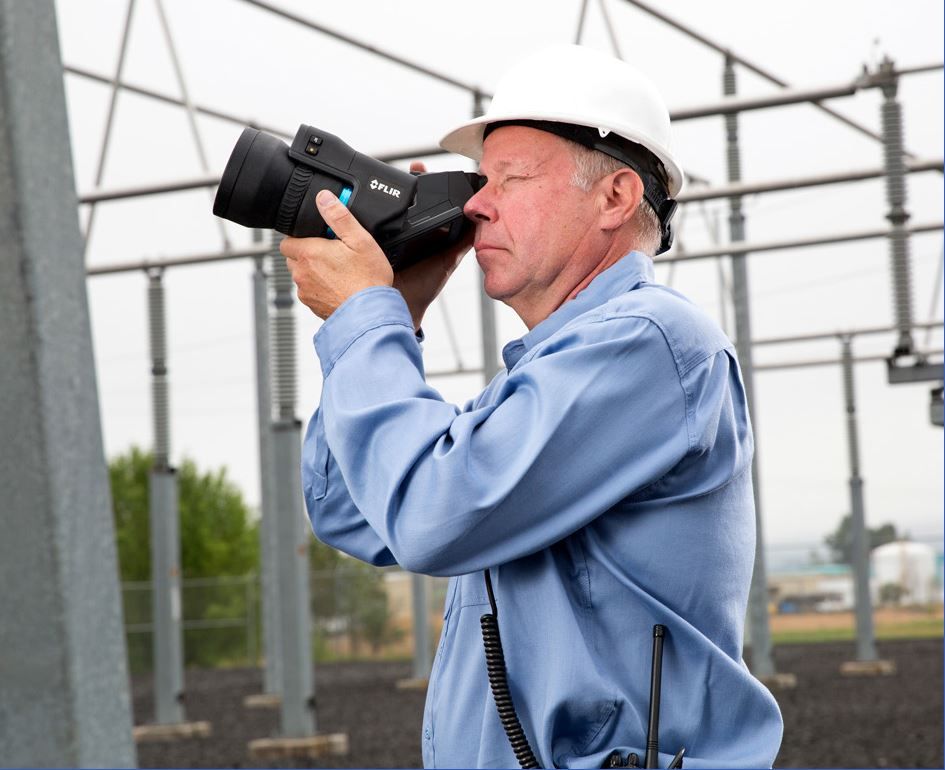
Incorporating thermal imaging technology into the preventive maintenance inspection routine allows utilities to monitor equipment in operating condition at any time they wish. Temperature anomalies can be efficiently located using a portable thermal camera, such as the FLIR T1020 HD thermal camera.
This camera offers the sharpest images, the most accurate temperatures and the greatest flexibility. The FLIR T1020 HD is equipped with a unique combination of MSX® (Multi-Spectral Dynamic Imaging), UltraMax® image enhancement technology and adaptive filtering algorithms, allowing users to record the smoothest and most detailed images.

The Results
Thermography technology enables utilities to establish a much more reliable electrical infrastructure. It gives them the ability to collect real-time temperature data to help operators maintain a safe and efficient grid. Maintenance operators can inspect the health of the bushings from a safe distance outside the fence line to potentially save lives.
Using thermography for routine or continuous monitoring could save millions of dollars in overtime and accelerated replacement costs. With the ability to identify hot spots on bushings before a failure occurs, maintenance operators can avoid unnecessary downtime and schedule maintenance as needed.
Last entries