
Technological innovation continues to transform the automotive industry, with infrared thermography emerging as a key tool for optimizing processes, ensuring quality and improving safety. In this article, we will explore how thermography is impacting every stage of a vehicle's lifecycle, from manufacturing to maintenance.
Table of Contents
What is thermography and why is it important for automotive?
Infrared thermography can identify temperature patterns through thermal imaging, providing a non-invasive and accurate method for detecting thermal anomalies. In the automotive sector, this translates into the ability to detect hidden faults, optimize production processes and prevent costly problems in terms of economy and safety.
To learn more about the operation and features of thermal imaging cameras, we recommend that you first read our full article on what they are and how they are used.

Outstanding applications of thermography in the automotive industry:
Inspection of electrical systems
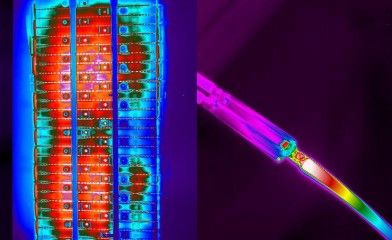
Modern vehicles are equipped with advanced electrical systems essential to their operation. Thermal inspection detects hot spots in components and connections, preventing failures before they become major problems. This improves vehicle reliability and reduces downtime.

2. Quality control in welding
In spot or laser welding processes, thermography ensures uniform heat distribution and structural integrity. This minimizes defects, material waste and the need for readjustments, optimizing efficiency in car body manufacturing.
3. Production of plastic parts
Thermal monitoring in the production of plastic components ensures that the cooling process is uniform, identifying possible molding defects. This improves the quality of parts for interiors and ventilation systems.
4. Tire inspection
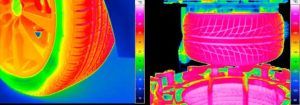
Thermal inspection of tires can detect structural defects and internal adhesive problems, ensuring greater safety and a longer service life.
Thermography applied to comfort and safety
Tests on heating systems
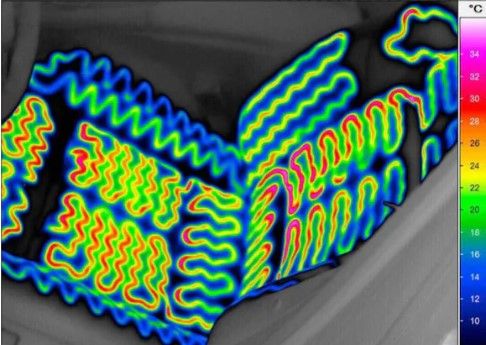
From windshields to heated seats, thermography verifies uniform heat distribution, ensuring a high-quality product and improved comfort for end users.
Airbag evaluation
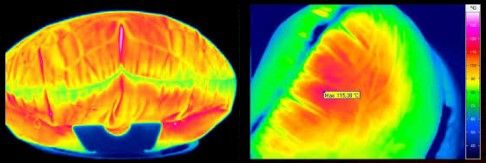
Thermal testing allows the functionality and deployment of airbags to be evaluated, reducing risk and improving consumer confidence, as occupant safety is paramount.
Sustainability and efficiency
Thermography also contributes to environmental compliance by optimizing the use of materials and reducing waste in manufacturing processes. This is especially important in an increasingly sustainability-oriented industry.
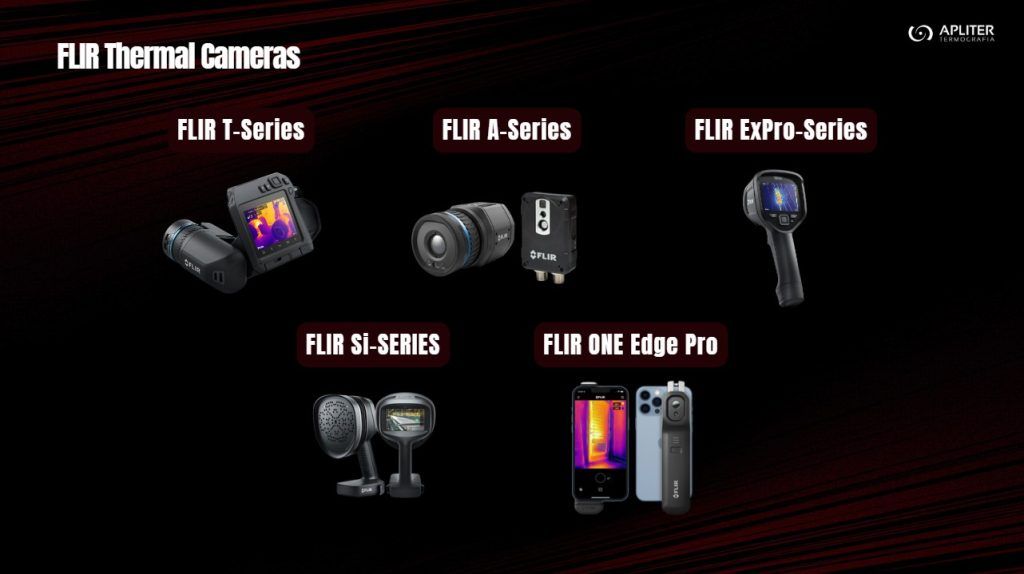
Thermal imaging tools for the automotive industry
Choosing the right tool is key to getting the most out of automotive thermography. The following are the most important options:
Conclusion
Infrared thermography is a key solution for the automotive industry, improving the quality, efficiency and safety of manufacturing and maintenance processes. At Apliter Thermography, we specialize in providing advanced technologies that drive innovation and sustainability in this dynamic sector.
Ready to discover how thermography can optimize your operations? Contact us and empower your business with customized solutions.